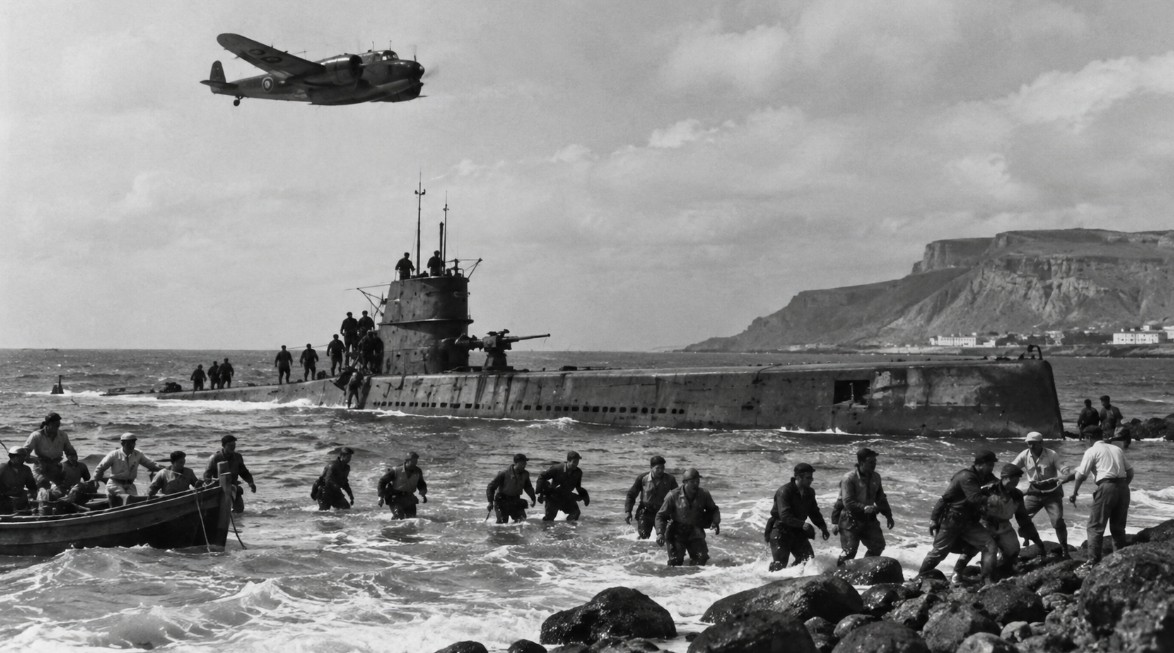
U-167: The German U-boat That Ended Its Final Patrol off Gran Canaria
In April 1943, during the Second World War, the German U-167, a Kriegsmarine Type IXC/40 U-boat, was operating in waters


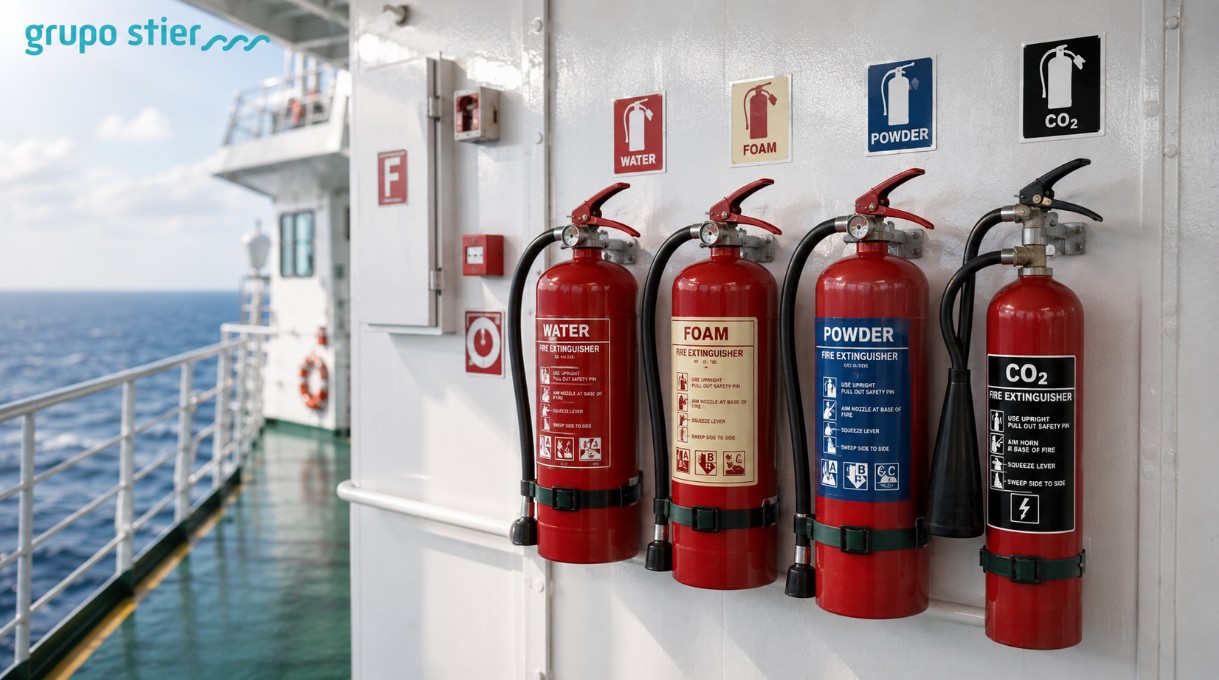
Fire safety is one of the most important priorities on any vessel, from small service craft to large cargo ships, tankers and cruise vessels. For this reason, international regulations, particularly the International Maritime Organization’s SOLAS Convention (Safety of Life at Sea), establish strict requirements regarding fire detection, firefighting equipment and onboard fire protection systems.
Not all fires are the same, and neither are fire extinguishers. Ships commonly carry water extinguishers for solid combustible materials, foam extinguishers for flammable liquids, CO₂ extinguishers for electrical equipment and dry chemical powder extinguishers for multiple fire classes. The choice of extinguishing agent depends on the specific hazards present in each area of the vessel, from engine rooms to accommodation spaces and bridge operations.
On large vessels, portable extinguishers are only one component of a much broader firefighting strategy that includes fixed CO₂ systems, high-expansion foam systems, fire mains, automatic detection systems and dedicated emergency response equipment. SOLAS regulations and the International Fire Safety Systems Code (FSS Code) require regular inspections, maintenance and crew training to ensure readiness in the event of an emergency.
Maritime experience consistently demonstrates that while technology is critical, human preparedness remains equally important. Having the right extinguisher in the right place and knowing how to use it correctly can make the difference between a controlled incident and a major emergency. Prevention, training and compliance remain the most effective tools for protecting lives, vessels and cargo.
More information at:
GRUPO STIER
Ship Agency
P&I Correspondents, Surveys.
+ 34 607 55 29 27
+ 34 650 24 75 74
www.stier.es
pandi@stier.es
agency@stier.es
In April 1943, during the Second World War, the German U-167, a Kriegsmarine Type IXC/40 U-boat, was operating in waters
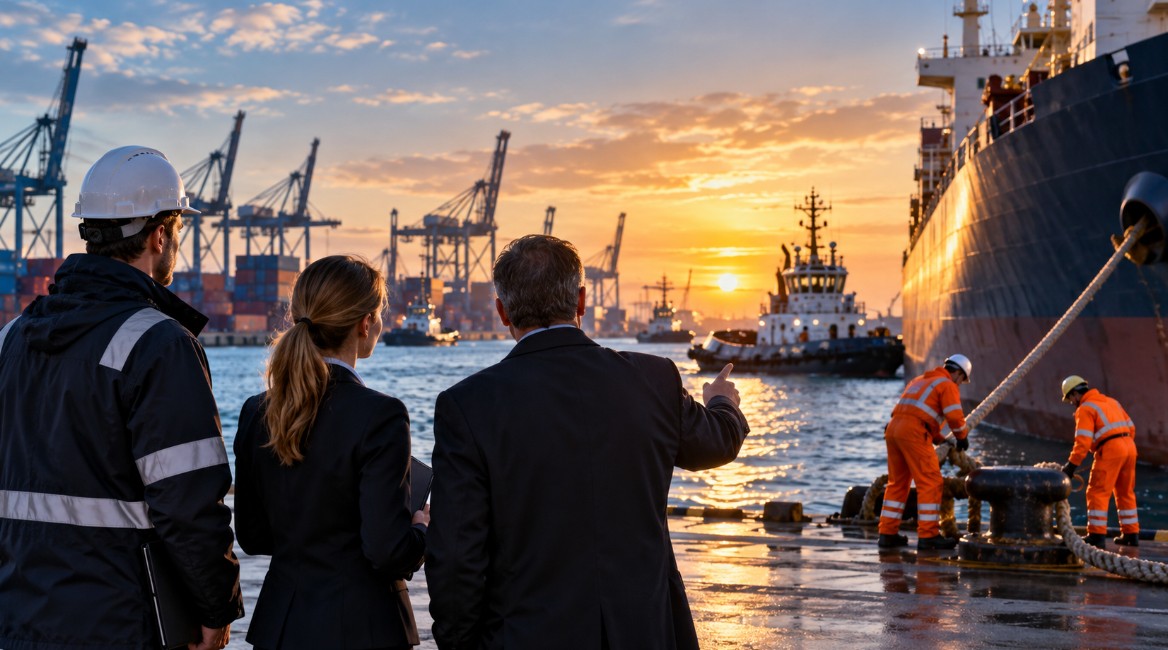
In an inherently international industry, having an effective network of P&I Correspondents is essential when a vessel requires assistance in