Spanish maritime strategy: nationality of senior officers of the Merchant Marine
Post by Naucher The merchant marine constitutes a strategic infrastructure for any state with a geographical position like Spain.


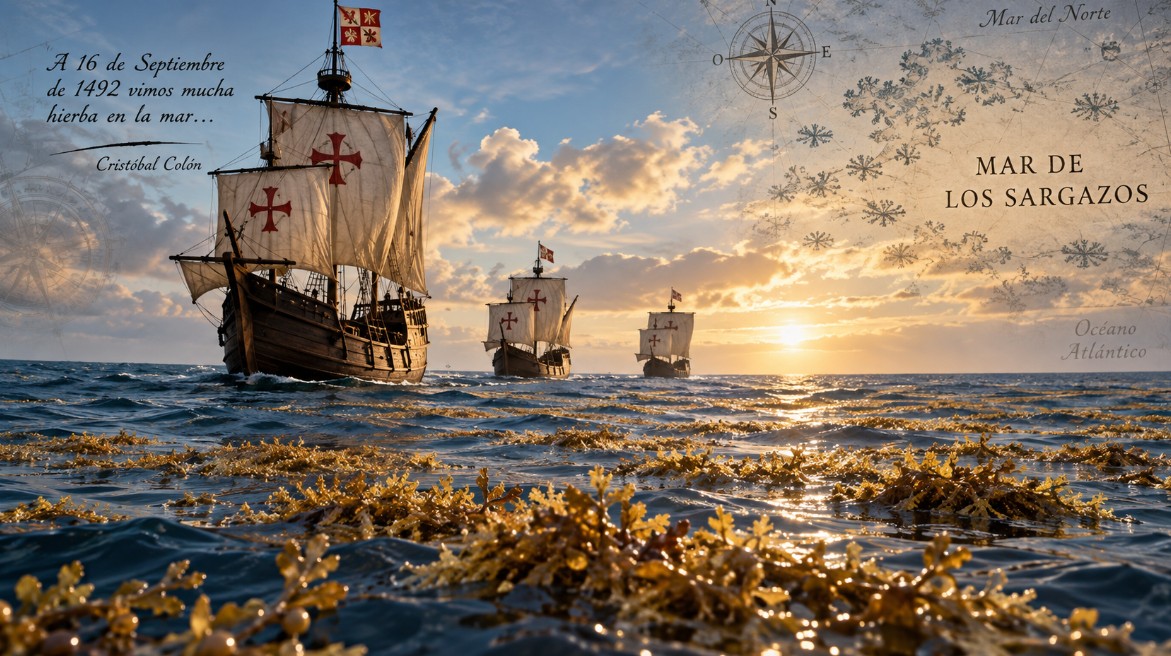
On September 16, 1492, during Christopher Columbus’s first westward voyage, his vessels began encountering large quantities of floating vegetation in the North Atlantic. The voyage account preserved through Bartolomé de las Casas provides one of the earliest European written records associated with what became known as the Sargasso Sea.
For the crews of the Santa María, Pinta and Niña, the increasing presence of seaweed in the open ocean was remarkable. Floating vegetation could be interpreted as a sign of nearby land or shallow waters, causing some concern among the mariners. Nevertheless, the vessels continued on their westward course through an immense oceanic region now renowned for its concentrations of floating Sargassum.
The Sargasso Sea is also oceanographically unique: it is the only sea in the world without a land boundary. Instead, its boundaries are defined by the major currents of the North Atlantic Subtropical Gyre, including the Gulf Stream, North Atlantic Current, Canary Current and North Atlantic Equatorial Current.
More than five centuries later, we know that these floating mats were not an obstacle capable of stopping the ships, but part of a remarkable pelagic ecosystem. Sargassum provides shelter, food and habitat for numerous marine species. This maritime anniversary reminds us that observing the sea, its currents and natural signs has always been an essential part of seamanship and ocean navigation.

More information at:
GRUPO STIER
Ship Agency
P&I Correspondents, Surveys.
+ 34 607 55 29 27
+ 34 650 24 75 74
www.stier.es
pandi@stier.es
agency@stier.es
Post by Naucher The merchant marine constitutes a strategic infrastructure for any state with a geographical position like Spain.
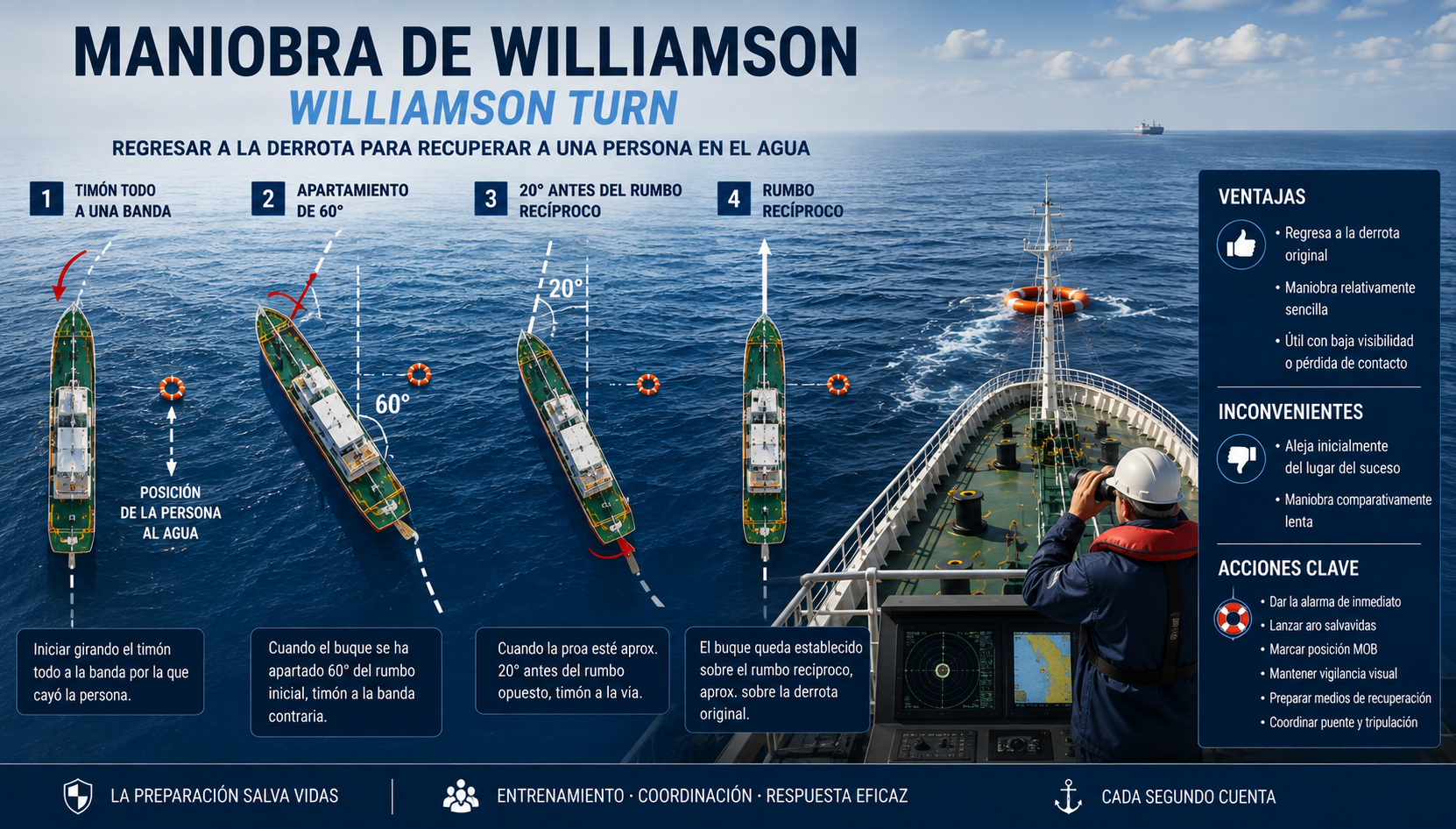
The Williamson turn is a recognised recovery manoeuvre included in the IAMSAR Manual, jointly developed by IMO and ICAO. Its