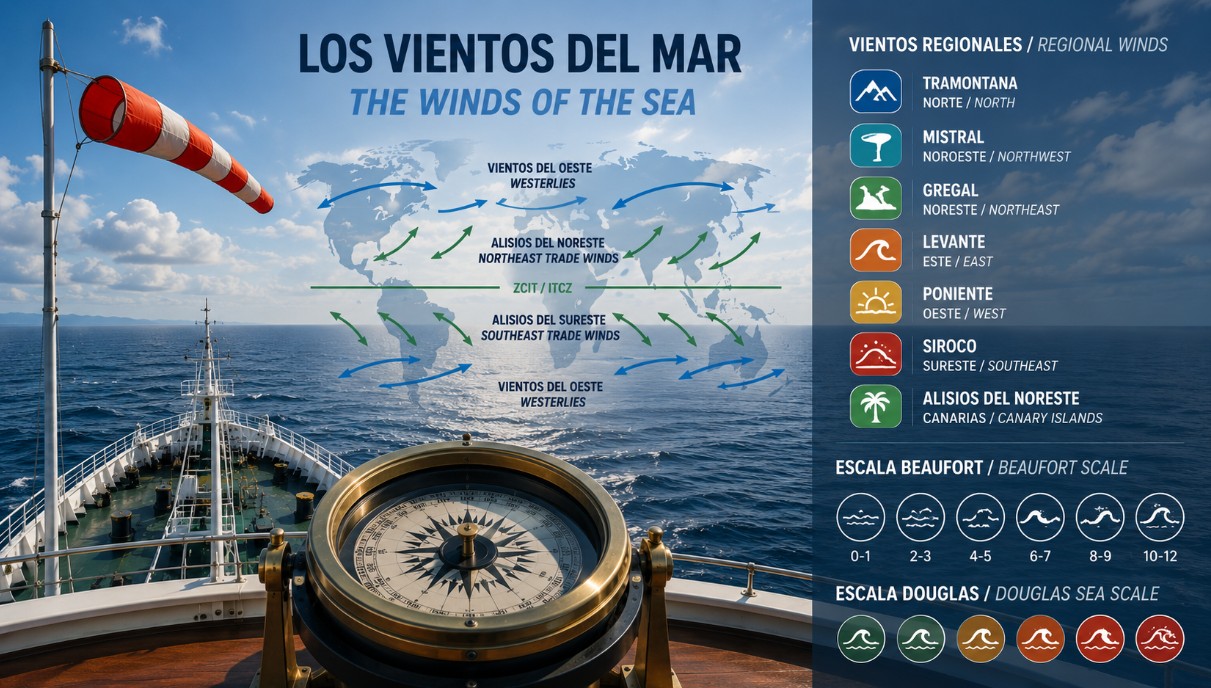
Maritime Winds: Understanding Them Means Safer Navigation
In the maritime industry, understanding a wind’s origin, direction and behaviour is essential for planning a safe passage, optimising manoeuvres


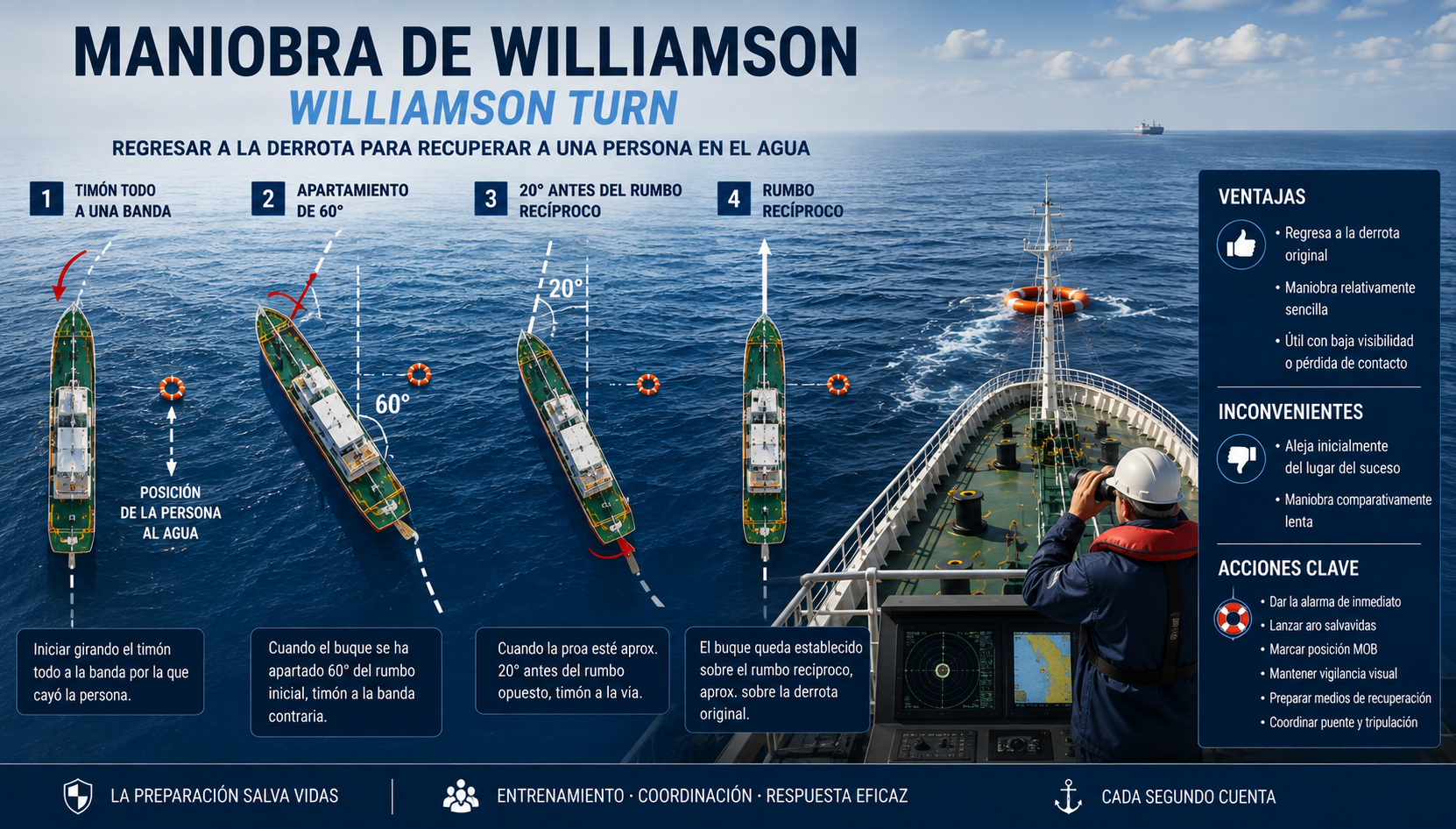
The Williamson turn is a recognised recovery manoeuvre included in the IAMSAR Manual, jointly developed by IMO and ICAO. Its purpose is to bring the vessel onto the reciprocal course, approximately following its original track, making it particularly useful when visual contact with the person in the water has been lost or in reduced visibility.
The standard procedure begins by putting the rudder hard over —towards the side of the casualty in an immediate-action situation—. After the vessel has deviated 60° from its original course, the rudder is put hard over to the opposite side. When the vessel’s heading is approximately 20° short of the reciprocal course, the rudder is placed amidships to steady the vessel on the opposite course. Actual vessel response will, of course, depend on its manoeuvring characteristics.
One of the main advantages of the Williamson turn is its ability to return the vessel to its original track, while also being relatively simple to execute. IAMSAR also identifies its disadvantages: it initially takes the vessel farther away from the incident position and is comparatively slow. It should therefore not be regarded as the only possible response to a person-overboard (MOB) emergency; the appropriate manoeuvre depends on the circumstances and the vessel involved.
The turn itself is only part of the emergency response. Immediately raising the alarm, deploying a lifebuoy, marking the MOB position, maintaining a dedicated lookout, preparing recovery equipment and ensuring effective bridge and crew coordination are equally important. Regular drills and proper seamanship can make the difference when every second at sea counts.

More information at:
GRUPO STIER
Ship Agency
P&I Correspondents, Surveys.
+ 34 607 55 29 27
+ 34 650 24 75 74
www.stier.es
pandi@stier.es
agency@stier.es
In the maritime industry, understanding a wind’s origin, direction and behaviour is essential for planning a safe passage, optimising manoeuvres
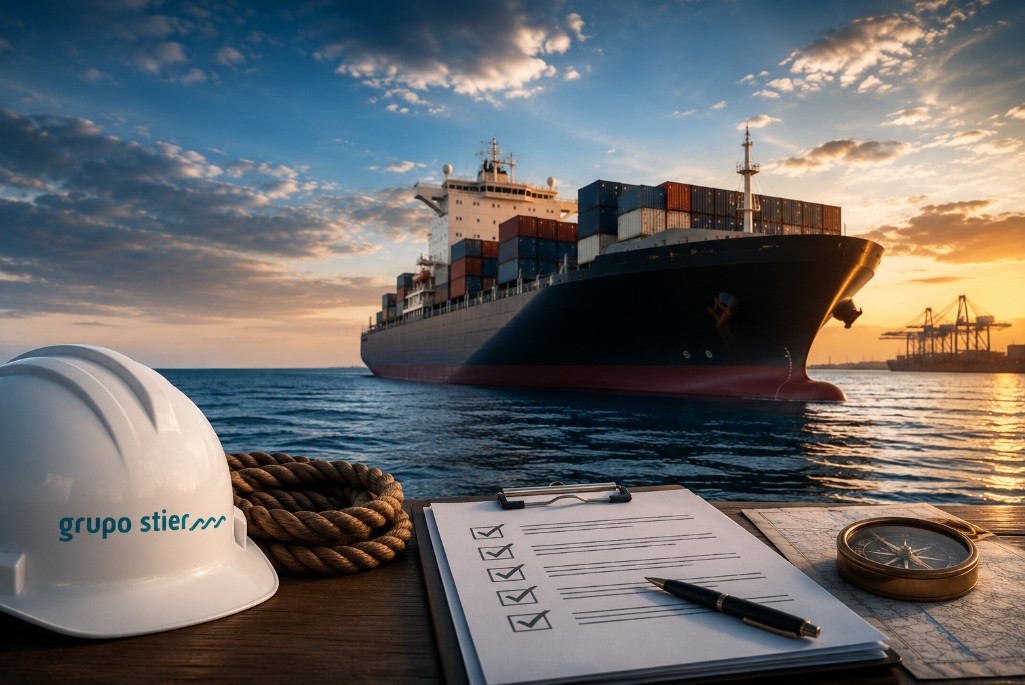
In international shipping, the best way to reduce losses is not always broader insurance cover, but strict regulatory compliance. Throughout