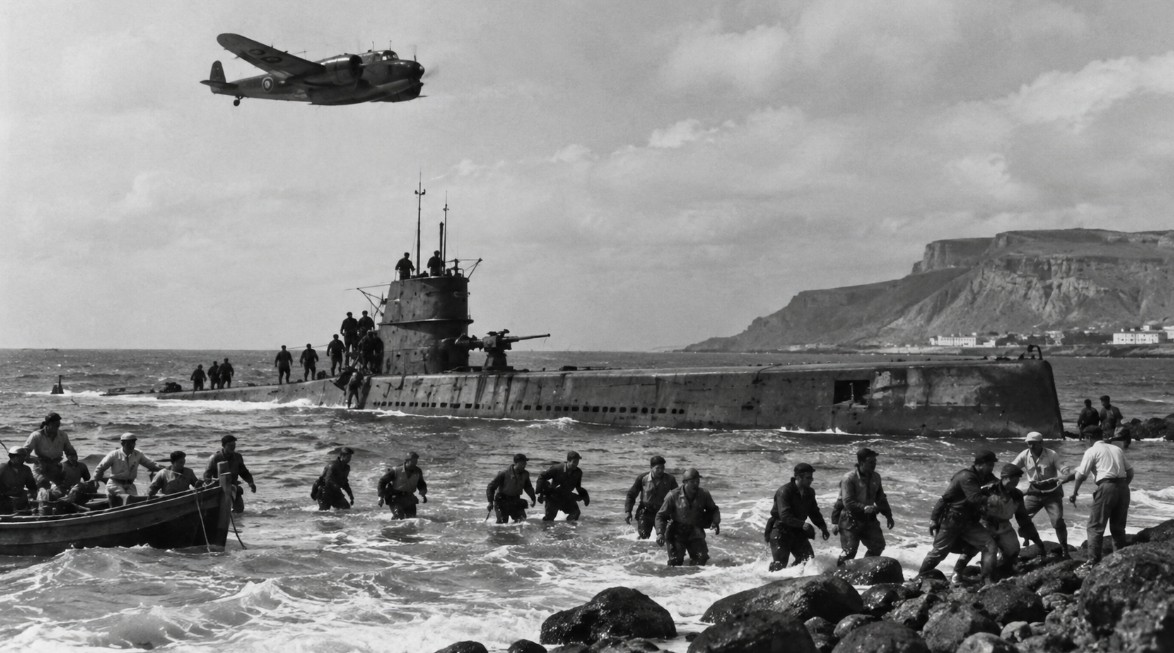
U-167: The German U-boat That Ended Its Final Patrol off Gran Canaria
In April 1943, during the Second World War, the German U-167, a Kriegsmarine Type IXC/40 U-boat, was operating in waters


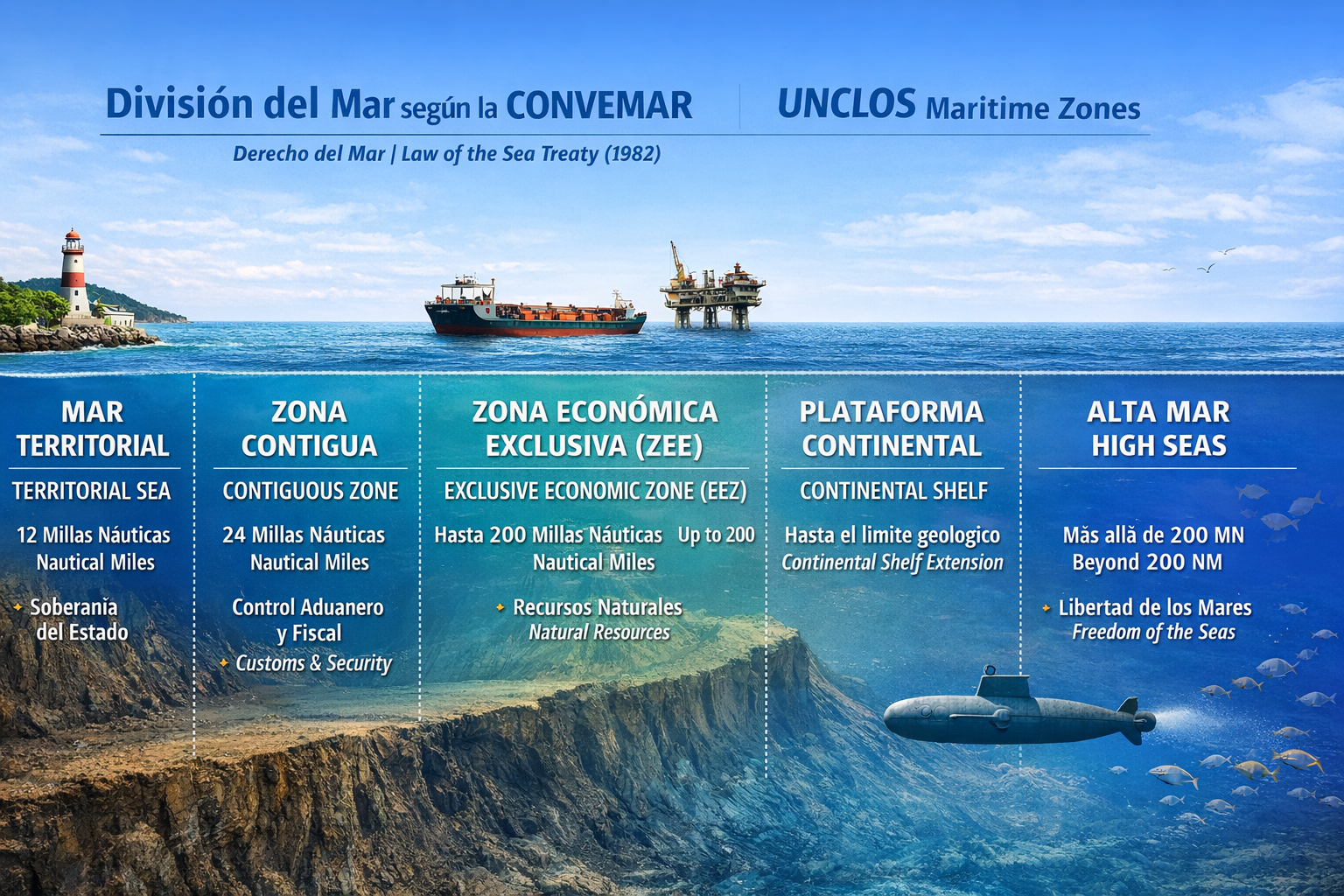
The United Nations Convention on the Law of the Sea (UNCLOS), adopted in 1982, establishes the international legal framework governing the oceans and defines how maritime spaces are divided among States. This treaty is essential to understand sovereignty, economic rights, and obligations at sea, especially in strategic regions such as the Atlantic.
The first maritime zone is the territorial sea, extending up to 12 nautical miles from the coast. Within this area, the State exercises full sovereignty, although it must allow innocent passage for foreign vessels. Beyond this lies the contiguous zone (up to 24 nautical miles), where the State can enforce laws related to customs, taxation, immigration, and sanitation.
Next is the exclusive economic zone (EEZ), extending up to 200 nautical miles. In this area, the State does not have full sovereignty but holds exclusive rights to explore and exploit natural resources, including fisheries and energy. This zone is particularly relevant for island regions like the Canary Islands.
Finally, UNCLOS defines the continental shelf, which may extend beyond 200 nautical miles under certain geological conditions, and the high seas, which are not under the jurisdiction of any State and are governed by the principle of freedom for all. These divisions reflect the balance between national interests and global commons.
More information at:
GRUPO STIER
Shipping agent
P&I Correspondents, loss adjusters.
+ 34 607 55 29 27
+ 34 650 24 75 74
www.stier.es
pandi@stier.es
agency@stier.es
In April 1943, during the Second World War, the German U-167, a Kriegsmarine Type IXC/40 U-boat, was operating in waters

In an inherently international industry, having an effective network of P&I Correspondents is essential when a vessel requires assistance in